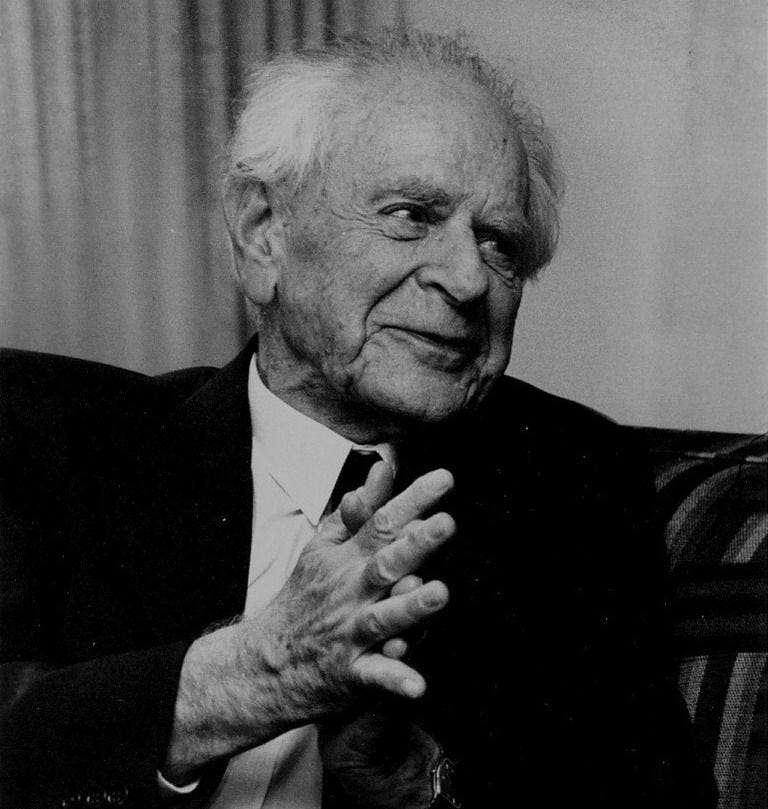
Karl Popper offered an elegant normative account of science as a process of conjectures and refutations: we formulate hypotheses or theories, expose them to criticism, scrutiny and experiment, and retain only what survives our best attempts at falsification. Even though we couldn’t ever know if we reached the truth, we can approximate it and get closer to it, just like Popper noted from Xenophanes: “(…) for all is but a woven web of guesses.”. I really like Popper’s views on philosophy of science and also his work on political philosophy in “The Open Society and its Enemies” (1945) and I also wrote about some other aspects of his philosophy in relation to professional ethics here in the past as well, however, Popper’s philosophy helps describing this process of conjectures and refutations, but not the origin of genuinely novel hypotheses, and this is where many other philosophers like Thomas Kuhn (who proposed his “paradigm shift”) were closer on the account of how many scientific discoveries actually unfolded.
